
My Thoughts on Holacracy
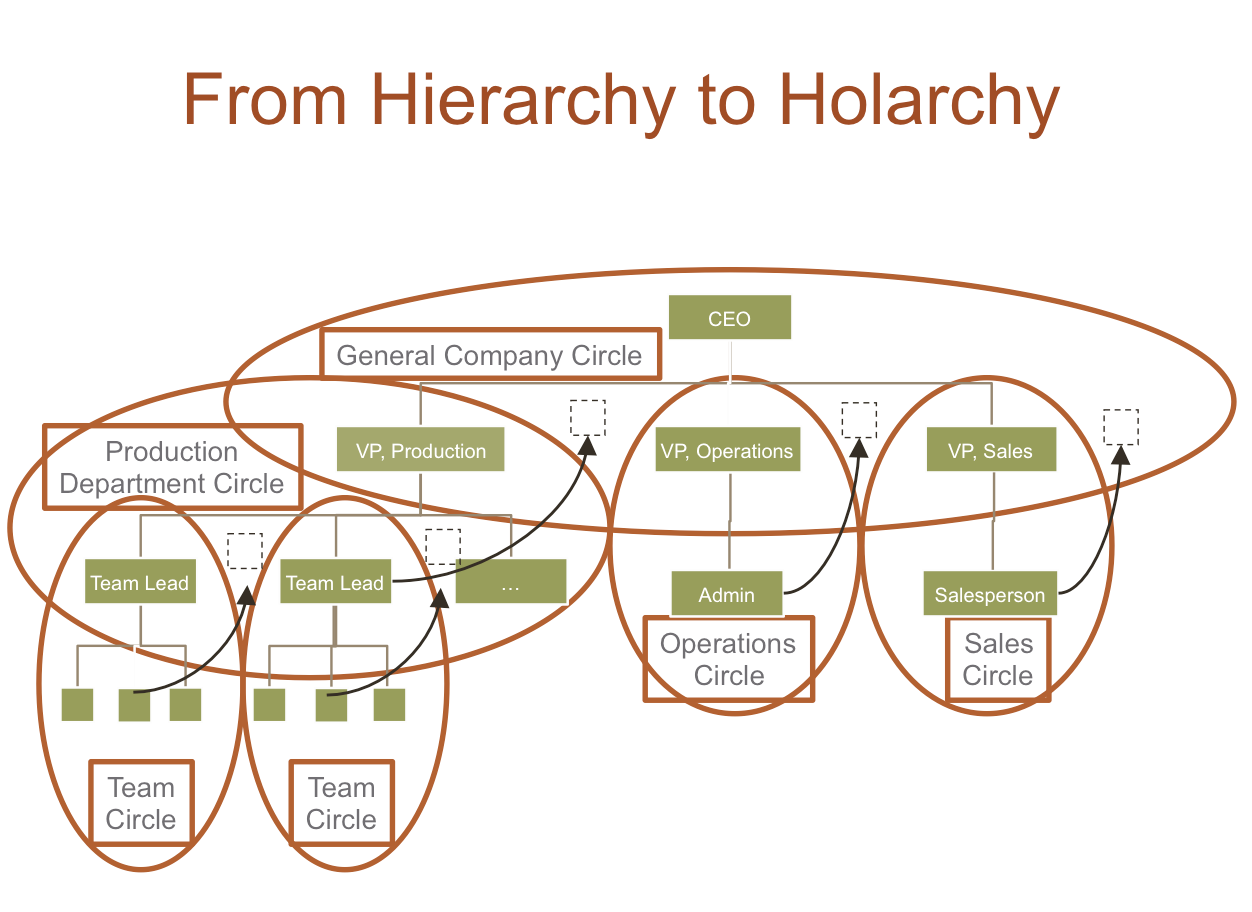
To understand nearly anything, you need a frame of reference. That includes ways of managing such as holacracy.
So first off, when I use the term "managing" I am referring to ALL that creates, perpetuates, and transforms a value creating enterprise, whether a one person business, a multinational corporation, or a non-profit organization. Managing then includes leadership, governance, and management. Managing sets enterprise trajectory. Governance establishes its identity. Leadership forms direction. And management generates its movement.
With this "managing framework" holacracy looks to be a subset of management. Holacracy pretends to have all the answers in one regard (but totally ducks the other regards, "like staff mentorship, setting compensation, hiring, and firing" makes it not only rigid (uninnovative) but woefully incomplete. (See Paul Carr's A Holacracy of Dunces). Holacracy also appears to eschew leadership, i.e. it replaces leadership with a management process -- a very rigid hierarchical process. As Steve Denning points out, holacracy is hierarchy on steroids. He notes that "In Holacracy, the hierarchy is an autocracy of circles, which are run according to detailed procedures. The arrangement is vertical. Each higher circle tells its lower circle (or circles), what its purpose is and what is expected of it. It can do anything to the lower circle—change it, re-staff it, abolish it—if it doesn’t perform according to the higher circle’s expectations."
Holacracy leaves so much out of managing (much of management, all of leadership, and all of governance) that it can hardly even be called a way of managing. At best, it is a management method that leaves a whole lot of managing unaddressed.
I also cringe when I hear holacracy being equated with self-management. It is so much less than effective self-management.
On a bit of a historical note, remember that the suitability of conventional (authoritative) management became more and more suspect in the late 1900s. Leadership was asked to step in to make up for its shortcomings. In other words, ineffective managing was replaced by a cult of leadership. In essence, leadership was asked to carry the burden of both leadership and management because conventional management failed to innovate, including the innovative transformation of the enterprise. Now holacracy attempts to swing the pendulum completely the other direction and expects its way of management to also carry the load of leadership, in the form of a rigid hierarchical process. Talk about throwing out the baby with the bathwater.
Effective managing requires effective leadership, effective management, and effective governance that all work together to achieve a vital trajectory for any and every enterprise that chooses to thrive forever.
Notes (there is always more to learn):
- Holacracy, an explanation of how it works and Image Credit: TalentRocket Holacracy - What Is It Exactly?
- Five Misconceptions About Holacracy
Add new comment